Planning a Stamped Concrete Patio: Thickness, PSI & Design
Planning a stamped concrete patio? Learn how slab thickness, PSI, footers, and color choices work together for a long-lasting, great-looking outdoor space.
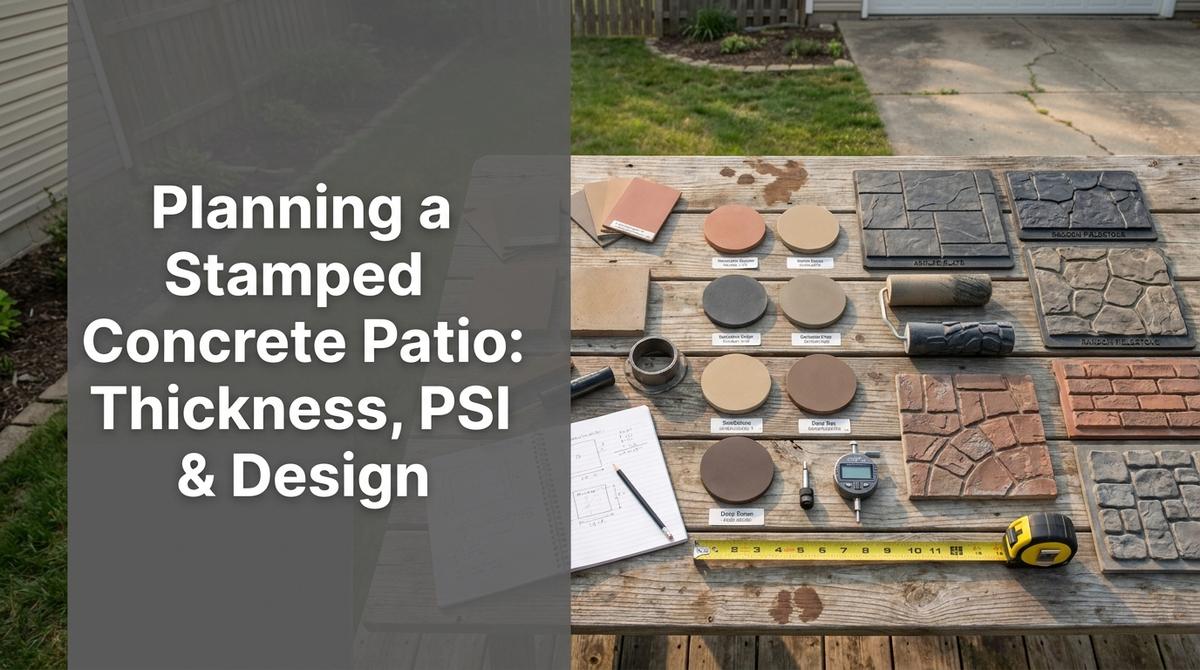
Planning a Colored and Stamped Concrete Patio Slab
Imagine a homeowner named Mark who has already done much of the preparation for his new stamped concrete patio. He has a 12’ x 30’ area prepared in his backyard, footings dug and reinforced, forms on site, and a clear vision: a colored and stamped concrete patio to replace his old deck.
Mark wants a heavy stone seamless stamp pattern with a sandstone base color and walnut release. He has inspiration photos showing exactly the look he’s going for. What he’s unsure about are the technical details: slab thickness, footing requirements, concrete PSI, and how those decisions affect the finished project.
Using Mark’s project as an example, we’ll walk through the important considerations involved in planning a stamped concrete patio, from proper preparation and concrete specifications to colors, patterns, and finishing options.
How Thick Should a Stamped Patio Slab Be?
One of the first things to consider when planning a stamped concrete patio is slab thickness. Proper site preparation and appropriate slab thickness are important for long-term performance.
Common Thickness for Backyard Patios
For many residential patios intended for foot traffic, outdoor furniture, and everyday use, a 4-inch concrete slab is common. However, the appropriate thickness depends on the intended use, soil conditions, site preparation, and applicable construction requirements.
When a project includes additional structures like Mark’s planned roof and walls, the slab and supporting footings may require different specifications. Structural loads, soil conditions, reinforcement, and applicable building requirements should all be considered.
When to Consider Going Thicker
Additional thickness or structural design considerations may be necessary when:
The patio will support roof posts or columns.
Retaining walls or masonry structures are planned.
Vehicles or heavy equipment may travel across the concrete.
In some cases, separate footings or engineered structural details may be required rather than simply increasing slab thickness.
Proper site preparation, reinforcement, and control joint placement contribute to the long-term performance of concrete. However, cracking can occur even when concrete is installed correctly.
Every project is different, which is why reviewing photos, site conditions, and project plans is an important part of determining the appropriate installation requirements.
Footers for a Patio with Walls or Roof Posts
In Mark’s example, the proposed footings measure 2 feet wide by approximately 1 foot deep, with reinforcement included. However, footing dimensions should never be assumed appropriate based on size alone.
Why Footings Matter
Footings help transfer structural loads from walls, posts, and roofs into the supporting soil. Their dimensions and reinforcement must be appropriate for the structure and site conditions.
When a patio will support additional structures, such as Mark’s planned roof and short walls, properly designed footings may be required.
Important Footing Considerations
Before construction begins, several factors should be evaluated:
Width and depth: Determined by structural loads, soil-bearing capacity, frost-depth requirements, and applicable building codes.
Reinforcement: Rebar size, spacing, and placement should follow the project’s structural requirements.
Structural connections: Posts, walls, and other structures may require specifically designed anchors, dowels, or other connections.
Permits and inspections: Local building requirements should be confirmed before installation.
Depending on the project, a licensed structural engineer may be needed to determine the appropriate footing specifications.
When working from online plans or general recommendations, it’s important to have the structural details reviewed before construction begins.
Choosing the Right Concrete PSI for a Patio
PSI (pounds per square inch) refers to the specified compressive strength of concrete. Selecting the appropriate concrete mix is an important part of ensuring the long-term performance of a patio.
For many residential concrete patios, 3,500 to 4,000 PSI concrete may be appropriate, depending on the intended use, environmental exposure, and project specifications.
In areas where concrete is exposed to frequent freezing and thawing, moisture, or deicing chemicals, additional mix requirements, such as higher compressive strength and proper air entrainment, may be necessary.
Stamped concrete does not automatically require a higher PSI simply because it has a decorative finish. Proper site preparation, mix design, placement, finishing, curing, and maintenance all contribute to the performance and appearance of the finished patio.
At D&D Legacy Contractors, we evaluate each project’s specific requirements to determine an appropriate concrete mix. We also commonly incorporate fiber reinforcement into our concrete as part of our installation process.
Design Choices: Color, Release, and Stamp Pattern
For his patio, Mark has a clear design in mind: a heavy stone seamless texture stamp, sandstone base color, and walnut release. We work with suppliers like Ocoee Steel/GQ Concrete and others that have full color and stamp lines, and we often flip through those same books during planning.
Picking a color combination
Decorative concrete coloring usually involves two key pieces:
Base color – integral color mixed into the concrete, or a color hardener applied to the surface. Mark’s choice: sandstone.
Release color – a colored powder or liquid applied before stamping to keep the mats from sticking and add antique shading. Mark’s choice: walnut.
A lighter base with a darker release, like sandstone and walnut, is a popular combo because it mimics natural stone – lighter “field” areas with darker joints and texture.
Choosing a stamp pattern
Mark had already picked a heavy stone seamless texture mat. Seamless stamps are a great choice when you want:
A more natural stone look without obvious grout lines
A continuous, textured finish that creates a more uniform look
A decorative surface with subtle texture and fewer pronounced grooves.
Other popular stamped concrete patterns include ashlar slate, cobblestone, and wood plank. Seamless textures are especially popular for patios because they create a natural, continuous appearance that complements a variety of outdoor spaces.
Decorative concrete colors and finishes can vary depending on materials, weather conditions, application techniques, and curing. While color samples and inspiration photos are helpful during planning, variations in the finished appearance are normal, and an exact color match cannot be guaranteed.
Maintaining Your Stamped Concrete Patio
Stamped concrete patios require routine maintenance to help preserve their appearance and protect the decorative finish.
Regular cleaning helps remove dirt and debris, while periodic resealing may be recommended depending on the type of sealer, weather exposure, and amount of foot traffic.
Homeowners should avoid harsh chemicals and follow the recommended maintenance instructions for their particular finish.
With proper installation and routine maintenance, stamped concrete can provide an attractive and functional outdoor living space for years to come.
Access, Timing, and What to Show Your Contractor
For a project like Mark’s, access to the backyard is an important consideration. Even without a fence restricting access, a contractor would need to determine whether a concrete truck could reach the pour location or whether additional equipment, such as a concrete buggy or line pump, would be necessary.
If you're planning a colored and stamped concrete patio, here's some helpful information to provide when requesting an estimate:
Overall yard photos showing how a truck could reach the area
Close-ups of the prep – footers, forms, gravel base, reinforcement
Inspiration photos of the colors and patterns you like
Your approximate project timeline and any scheduling considerations.
The more details you can share, the easier it is for our team to evaluate your project, identify potential preparation or structural requirements, and provide an accurate estimate.
Thinking About Your Own Stamped Patio?
Whether you’re exploring ideas like Mark or already have a design in mind, planning your stamped concrete patio involves several important decisions. Slab thickness, concrete strength, footings, reinforcement, and decorative finishes all contribute to the final project.
At D&D Legacy Contractors LLC, we help homeowners throughout Cleveland, Chattanooga, Athens, and surrounding communities, including nearby North Georgia, create beautiful and functional outdoor living spaces.
Whether you’re planning a new stamped concrete patio or replacing an existing surface, our team is here to help you explore your options and determine the appropriate approach for your project.
Contact D&D Legacy Contractors today to request your free estimate!